

Culture Food

What is Fufu Food? 8 Things You Should Know and Why it’s Never Chewed

what is fufu
Written by See Africa Today

What is fufu, and why is it so famous among Nigerians and Ghanaians?  Truthfully, West African cuisine is as exciting as it is sumptuous. You can’t have enough of the authentic dishes of the land. One dish that charms its way into the hearts of West Africans is fufu. What’s special about this dish is that its fame follows it to African restaurants in Europe and the US?

What’s interesting about this Nigerian delicacy is that it’s almost a religious affair, especially among the Ashanti people in Ghana. A day is never complete if a Ghanaian man hasn’t fed his appetite with this culturally symbolic dish. Women, too, are not left behind when it comes to the ‘religious significance’ of eating it. They learn how to prepare it from a young age, and they enjoy it just like her men do. You must be asking yourself, “what is behind the undying fame of this West African staple food whose name means a mashed mix that got TikTok’s #FufuChallenge on fire?”

What is Fufu Made of?

Fufu is pounded, fermented cassava served alongside popular West African stews such as egusi or okra stew/soup. History from Ghana explains in depth what is fufu. Historically, this delicacy originated in Ghana’s Ashanti region, one reason why it’s worshipped by Ghanaians. It then spread to Nigeria, where it is popular too. Nigeria is the largest cassava producer in the world, with an estimated annual production of 63 million tonnes.  Ghana produces an average of 25.6 million tonnes of cassava annually.

is fufu healthy

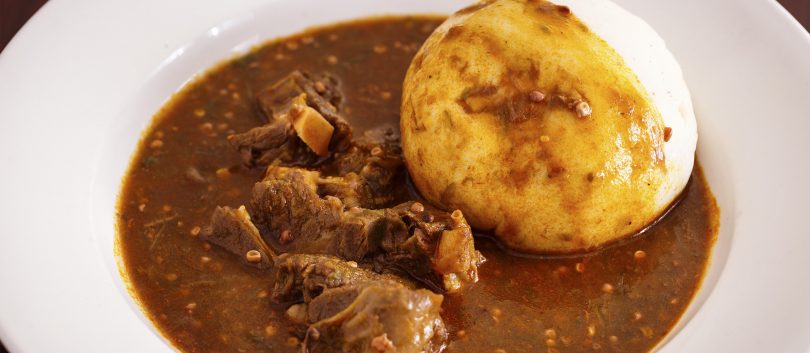
A plate of fufu served with a Nigerian stew. Photo/The New York Times

The huge cassava production in both countries makes fufu a staple dish.  Ground cassava is allowed to ferment before being prepared into a sticky dough, a popular accompaniment for chicken or meat stew. Interestingly, queries of fufu inspired an almost similar dish that is part of the Caribbean cuisine. Although its roots are in Ghana, you’ll be surprised to find this meal in other West African nations. Guinea, Liberia, Cote D’Ivoire, Togo, Benin, Cameroon, Angola, Gabon and parts of DR Congo enjoy it too.

How is Fufu Prepared?

Preparing fufu is not an easy task. You need to learn the skills to prepare it, perhaps this is the reason why young Ghanaian women spend years learning how to prepare it. To further expound on what is fufu, you must understand its preparation method. Traditionally, this meal comes from pounded cassava that is then allowed to ferment. The fermentation gives it a distinctive sour taste.

Cassava powder is boiled together with green plantain or cocoyam. You can adjust the thickness by simply adding more water. However, the thicker it is, the better it tastes when eaten with stew.  Fufu is best enjoyed by eating with bare hands. There is an unexplained logic and traditional chemistry on why it gets so sweet when eaten with the fingers. You scoop a portion and dip it in your stew, and straight into your mouth. Popular stew soup that accompanies fufu includes groundnut soup, palm nut soup, or egusi soup. These are authentic soups in West Africa.

nigerian fufu

Women grind fresh cassava then let it ferment before pounding it into a dough. Photo/Obaapa’s recipe

African Fufu History

Much as Ghana is credited with being fufu’s homestay, its discovery dates back to the 16th century. Portuguese traders from Brazil introduced fufu to Africa, and when it landed in Ghana, the ancestors named it ‘fufuo. ’ They mixed the fermented cassava with plantain and pounded it to get a sticky dough. Since then, they have passed this lesson from generation to generation.

The food then became a staple dish in Ghana before spreading to other West African and Central African nations. You can also find it in Caribbean nations. Cuba, Jamaica, Haiti, Puerto Rico and the Dominican Republic all have African-inspired fufu. However, Caribbean fufu has a firm texture and a strong flavour compared to what is in Ghana. African Americans view eating fufu as a way to connect with their ancestors, who discovered it in the 16th century.

Is Fufu Healthy?

Reminiscent of many other traditional West African dishes, fufu is a nutritional power pack. The numerous health benefits it brings forth tell another story besides answering definitively what fufu is. Firstly, it has low cholesterol levels and is rich in potassium and fibre. The resistant starch in it aids in digestion by providing beneficial bacteria in the gut and reducing inflammation, too.

Is Fufu Just Dough?

Raw bread dough comes to mind when you see fufu’s silky, flexible texture, yet it is not “just dough.” The most important difference is how it’s made and what state it is in. Dough is a mix of flour and water kept for cooking later.

On the other hand, fufu is a ready meal prepared from hot, starchy foods like cassava, plantains, or yams. They are cooked, crushed, or kneaded into a smooth, even paste. Heating makes the starches turn into gel, which makes it easy to digest and gives it its characteristic, stretchy texture.  Its nature of preparation answers what is fufu food.

What is the Difference Between Ugali and Fufu?

what is the difference between ugali and fufu

A plate of Ugali served with vegetables. Photo/Food Sturvs

Ugali and fufu are both common starchy foods in Africa, yet they are very different in how they feel, how they are made, and where they come from.

Fufu: A meal that comes mostly from West and Central Africa. You boil and pound starchy foods like cassava, plantains, or cocoyam to make it. This method takes a lot of work, but it makes a smooth, flexible, dough-like consistency that people commonly roll into balls. It tastes mild and a little bit fermented, especially when it’s made with cassava.

Ugali is the main food in East Africa, especially in Kenya, Tanzania, and Uganda. It is prepared by mixing cornmeal (maize flour) into boiling water until it becomes a thick, solid paste. It feels like polenta or a thick porridge. It’s served in a lump and tastes like ordinary corn.

Why are We Not Supposed to Chew Fufu?

You don’t chew fufu; you swallow it. This order is a cultural guideline based on tradition and table manners that West Africans practice. According to traditionalists in West Africa, this delicacy should be swallowed while accompanied by tasty stew or soup. Pinch off a little ball, make an indentation with your thumb, and use it to scoop up the soup that comes with it.


You then swallow this small piece with very little chewing.  There are two reasons for this:  First, it lets the fufu soak up all the rich flavours of the soup as it goes through the mouth.  Second, it’s easy to swallow because it has a smooth, gelatinous texture.  Chewing it fully is not dangerous, but it appears unconventional.

What is the Kenyan Version of Fufu?

Ugali is the Kenyan counterpart what is fufu.  As stated above, they are different dishes, although they both serve the same purpose. It suffices to say that they are starchy meals for sauces, stews, and vegetables.  Ugali, produced from white or yellow cornmeal, is the most common food in Kenya.

Conclusion

In general, the proof of how good fufu is in its preparation. Women grind the cassava into powder using a large pestle and mortar. Finely ground cassava always makes a better dish. Additionally, the sensuality of eating with your fingers adds a magical touch to the meal. It represents Ghanaian and Nigerian heritage and answers what is fufu.

Frequently Asked Questions

1. What does fufu taste like?

Fufu has a starchy and slightly sour taste with a smooth but stretchy texture. It goes well with a spiced stew because it’s not flavourful alone.

2. Do you chew or swallow fufu?

You swallow fufu. Its smooth texture oiled by a stew makes it easy to swallow it.

3. Why is fufu so expensive?

Fufu is expensive because it takes time and skill to prepare.

4. What does fufu do to your body?

It improves digestion in your body because it’s high in dietary fibre. Further, it’s a good source of energy and potassium-rich.

About the author

See Africa Today

Leave a Comment

Subscribe for notification