

You can get the same rush from sand dunes while in East Africa as you would in Dubai, but nobody ever tells you that until you get to the deserts in Kenya. Desert safaris are becoming increasingly popular among both domestic and international vacationers due to their exciting potential. However, only a handful of people are aware of the awe-inspiring experience of visiting the Chalbi Desert in Northern Kenya.
Table of Contents
Which Deserts are in Kenya?
Kenya is popular for its wildlife, cultural heritage, and dramatic landscapes across the country. It’s a country with many hidden gems, and deserts are, interestingly, some of the little-explored hidden gems in this nation. Very few people visit these deserts despite efforts by the government to market them as the country’s next big tourism destinations. The three major deserts in Kenya include the following:
- Nyiri/Nyika Desert
- Mambrui
- Chalbi Desert
Which is the Biggest Desert in Kenya?

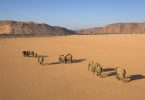
Nyiri Desert. Photo/Wildlife Kenya Safaris
Nyiri/Nyika Desert, found in Kenya’s south-central region, is the biggest among the deserts in Kenya. It is located approximately 50 miles east of Lake Magadi and near the Tanzanian border to the north. The Amboseli National Park and the northern portion of Lake Amboseli are within the desert’s boundaries. It at its northern tip where you’ll find Nairobi National Park, and at its southern tip is where you’ll find Tsavo West National Park.
There are areas of the desert in thickets of small trees, many of which are thorny and some of which contain poison. There are signs indicating game tracks among them. The trees have green leaves and blossoms during the brief wet season. But during the dry season, they are naked and twisted by greyish green creepers and the hornlike fronds of thorny euphorbia. This is characteristic of deserts in Kenya.
There are only a few major springs and riverbeds spread far apart; therefore, water is in short supply. The plain peppers with rocky hills, some of which sit on even older rocks. The desert is home to various trees known as baobabs, some of which are over 2,000 years old. They have grey trunks measuring up to 10 feet (3 meters) in diameter. Fauna is plenty, and you can always spot elephants, giraffes, rhinoceroses, lions, leopards, lesser kudu, and impala in the adjacent parks.
Which Desert is Found in Marsabit?
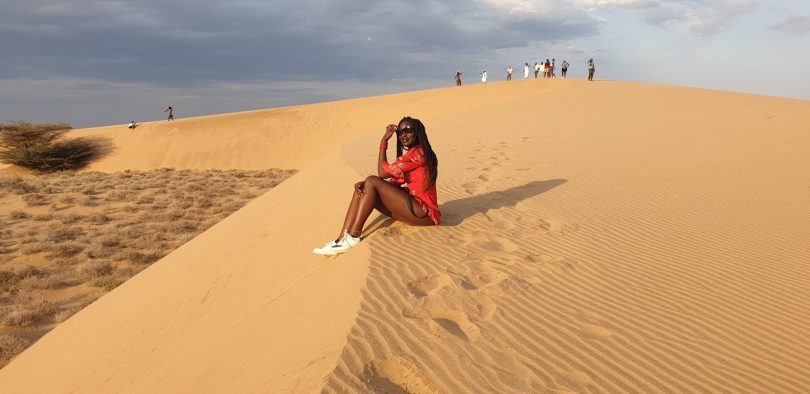
Chalbi Desert. [Photo: Kenyan backpacker]
Although Marsabit and the entire northern Kenya are very hot due to their arid nature, Chalbi Desert’s temperatures are much higher. It’s the hottest place in the country. But this does not take away its beauty. It is coated in the marvellous scenery of volcanoes and the remains of ancient lava flows. The population is scarce, but people have learnt of its beauty over the years. The Rendille and Gabbra communities are the main inhabitants of this desert.
The volcanic mountains towering over the desert from afar have thousands of kilometres of sand dunes. They are so attractive to travellers in and out of Kenya. From the horizon of the desert, coarse sand covers pure rocks from the volcanic action that happened millions of years ago. Just like the Southern African Kalahari and the Namib Deserts, the Chalbi Desert has several salt pans. They benefit the local community, which is made up of pastoralists. They feed it to their cattle as a natural salt lick. History suggests that millions of years ago, there was a lake which dried up and formed what the present-day Chalbi Desert is.
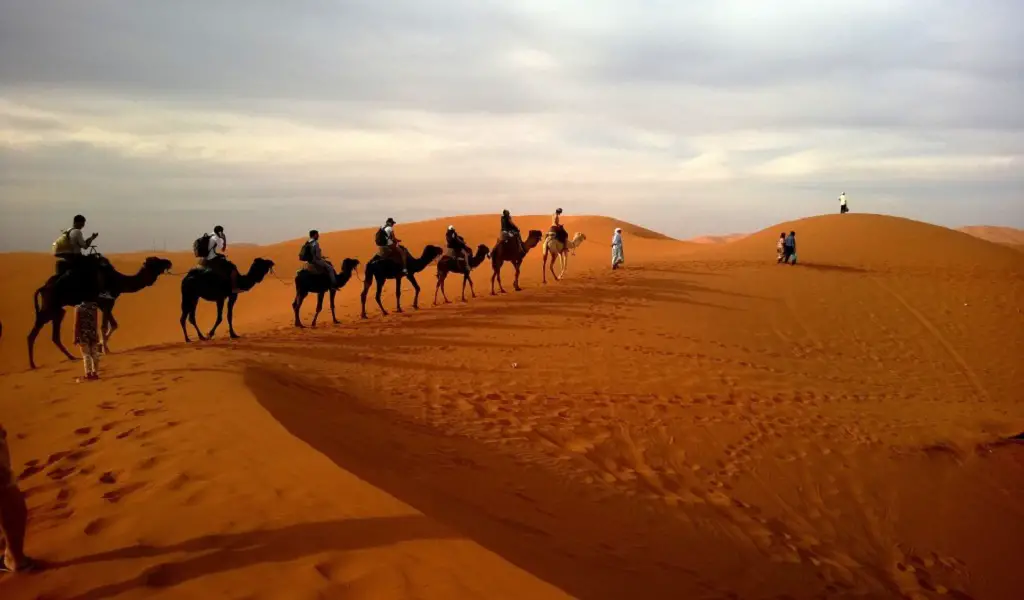
The desert oasis called Kalacha quenches the thirst of thousands of animals. However, it is a few days trek to the oasis. The best time to visit one of the popular deserts in Kenya is between July to October, January to February. You can explore it in a desert drive or on a camel’s back.
Is Mambrui a Desert?
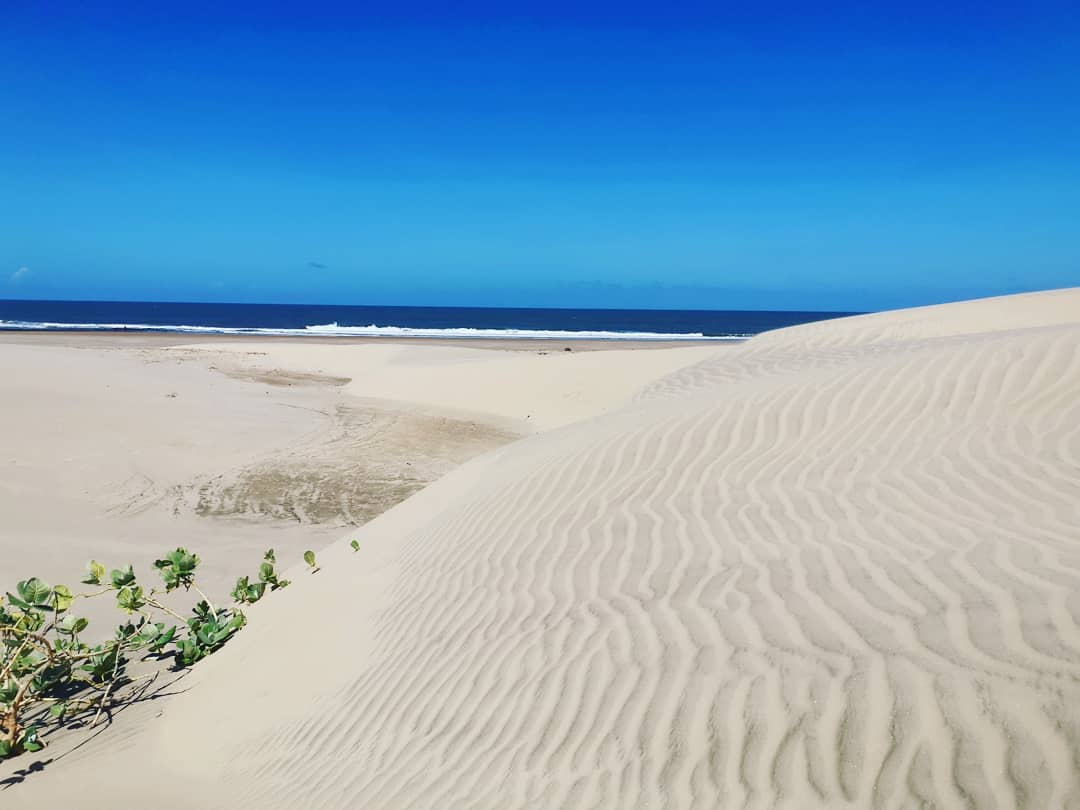
Mambrui Sand dunes are in the northern part of Malindi. [Photo: Twitter]
It holds a lot of historical significance in the country’s ancient times. It was a home for Kenyan and Chinese archaeologists for donkey years. The archaeologists explored a theory on Chinese presence in Kenya during the reign of the Yongle Emperor of the Ming Dynasty here. Nature is quiet here; only its beauty speaks loudly enough. Baobab trees dot Mambrui, which winds down to the Sabaki River, which is a lifeline for thousands of people in the area.
Discover more from See Africa Today
Subscribe to get the latest posts sent to your email.