

Spending time with the Hadzabe tribe in Tanzania leaves you wondering why evolution can’t accommodate everyone. How did human evolution forget 1,300 Hadzabe people or did they just choose to remain hunters and gatherers? This is the first question that comes to mind whenever you step foot in Northern Tanzania where they live.
Bare-chested and covering their nether regions in skimpy wild animal skins, this tribe stretches from the Serengeti Plateau to the Eyasi Valley. They are a tourist fascination in the north with a unique way of life which they have held onto for over a century.
Table of Contents
What is the Hadzabe Tribe Known for?
Tanzania’s Hadzabe Tribe is famous for its hunting and gathering lifestyle in the 21st century. They survive by religiously following the norms of the tribe — hunting and eating bush meat. Nothing is out of bounds for their next meal. They hunt large wild animals including primates such as baboons and eat them.
Civilisation isn’t something they are aware of or care about either. Hadza people live a day at a time only worrying about their next meal which is never far away from them. Their lives are void of external worries normal in human life such as career development, and personal development among others.
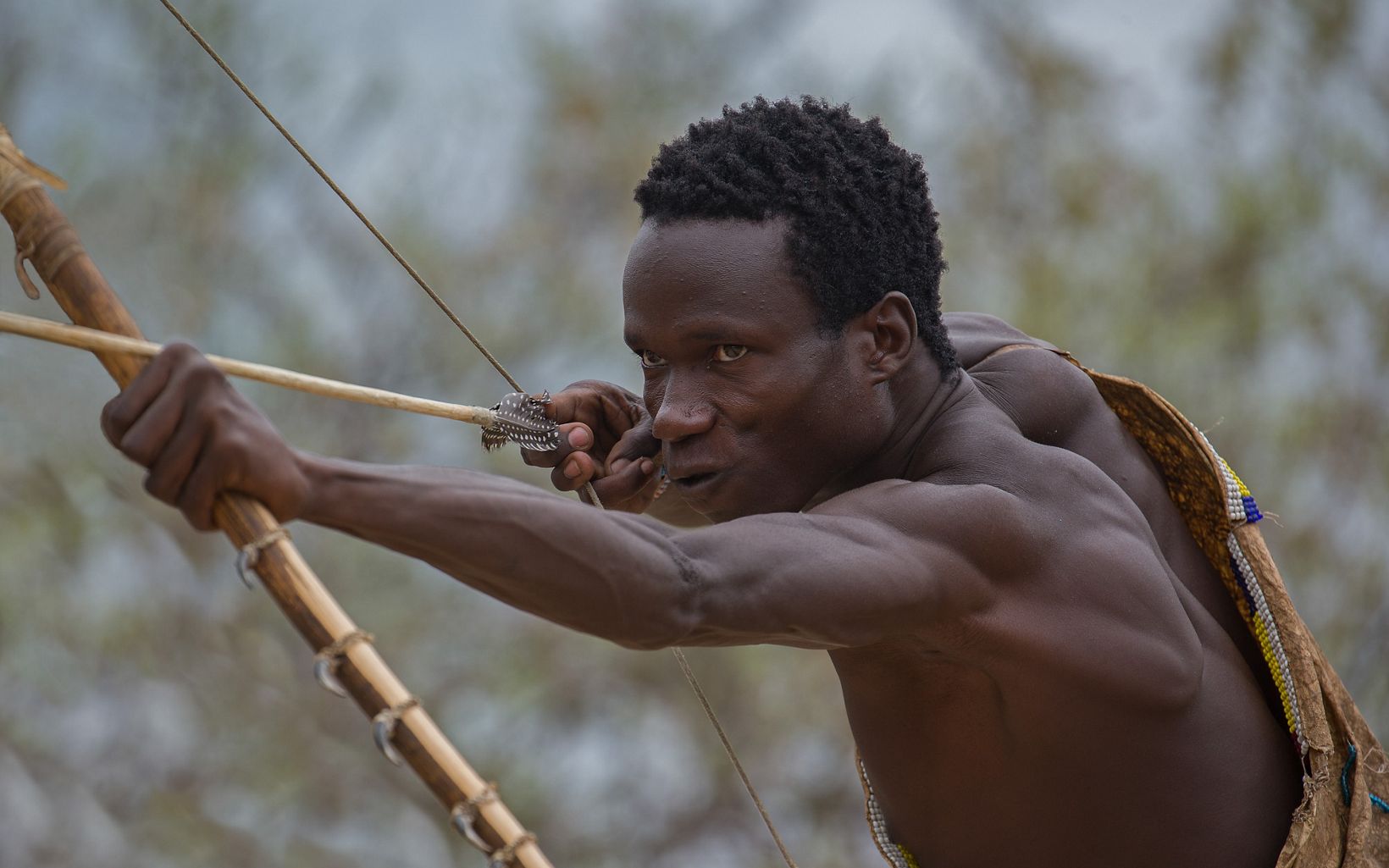
Hadza Tribe. They handmake their bows and arrows for hunting [Photo: The Nature Conservancy]
They live in camps of 10-20 people. These camps are semi-permanent huts in nature. Remember, they move all over the north in search of wild animals and wild berries, all of which appear seasonally in different places.
Do Hadza Speak Swahili?
The Hadza don’t speak Swahili despite living in Swahili’s most fluent country. They have a distinct click language closely resembling what the Khoi Khoi from South Africa speak. However, some of the community members have basic knowledge of the official Tanzanian language. They use it during their interactions with tourists fascinated by their cultural way of life.
A tour guide who understands the Hadza language accompanies tourists and translates bits of the tribe’s life that they don’t understand.
Do Hadzabe Tribes Marry?
What does a marriage in this tribe look like? It’s simple. Most men and women marry at 18 years old. There is no traditional ceremony or dowry linked to these marriages. A man who likes a particular woman frequently brings honey and wild meat to her hut. This is enough for marriage between the two. Polygamy is also uncommon in the Hadzabe tribe. Their hunting and gathering lifestyle wouldn’t favour a polygamous setting for men. In case a couple is fed up, they stop living together and life goes on.
Why are the Hadza so Healthy?
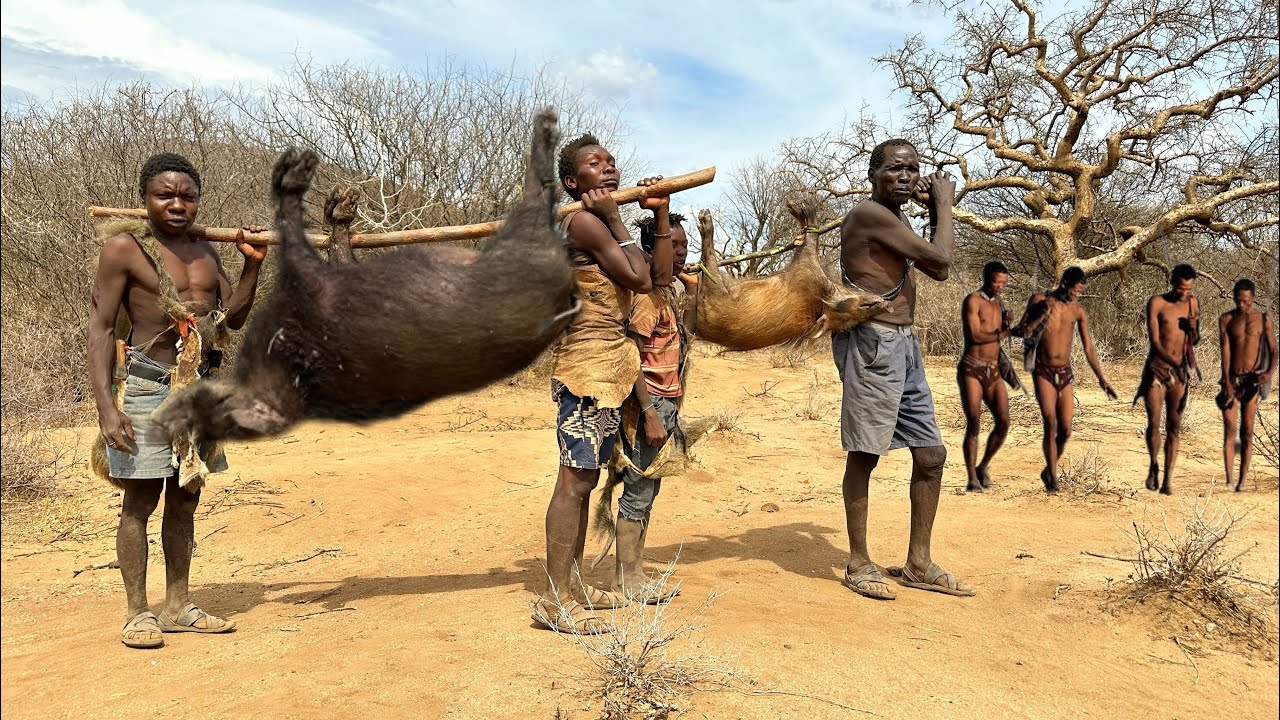
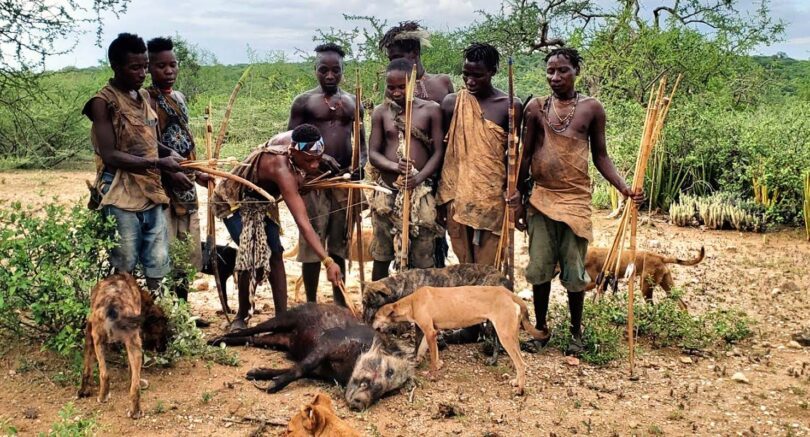
A group of Hadza men from a hunting spree. Their diet consists of honey, meat, fruits and vegetables. Photo/YouTube
Contrary to the belief that they lead a poor lifestyle, the Hadza score big on the health board. Research by Duke Global Health Institute indicates that their general lifestyle, starting from the sourcing of food, makes them healthy. They are physically active in hunting and gathering natural foods. A Hadza mainly feeds on honey, meat, berries, fruits and vegetables. Honey supplies 20% of their body energy, which they need to keep up with their lifestyle.
Hadzabe tribe’s diet helps them maintain a constant body mass, weight, and walking speed. Most of them live in their 70s, and some 80s, without any reported cases of lifestyle diseases such as diabetes, high blood pressure and heart-related diseases. The research stated that most Hadza adults walk constantly until the day they die. Much of it is attributed to their diet and general lifestyle.
Do the Hadza Drink Alcohol?
Let’s call them ceremonial partakers of alcohol in this sense. They are big consumers of wild honey, which they trade, at times, with neighbouring communities rearing cattle and farming. They use the honey to prepare a traditional brew, which they share with the Hadza to enjoy.
Do Hadzabe Believe in God?
The Hadzabe tribe has an animalistic worldview. They believe in the power of heavenly bodies and the spirits of their ancestors instead of one all-powerful god. They don’t believe in a god who judges, makes moral laws, or actively affects people’s lives in the way that Abrahamic religions do. In their worldview, the moon ‘Haine’ and the sun ‘Ishoko’ are the two most important celestial bodies.
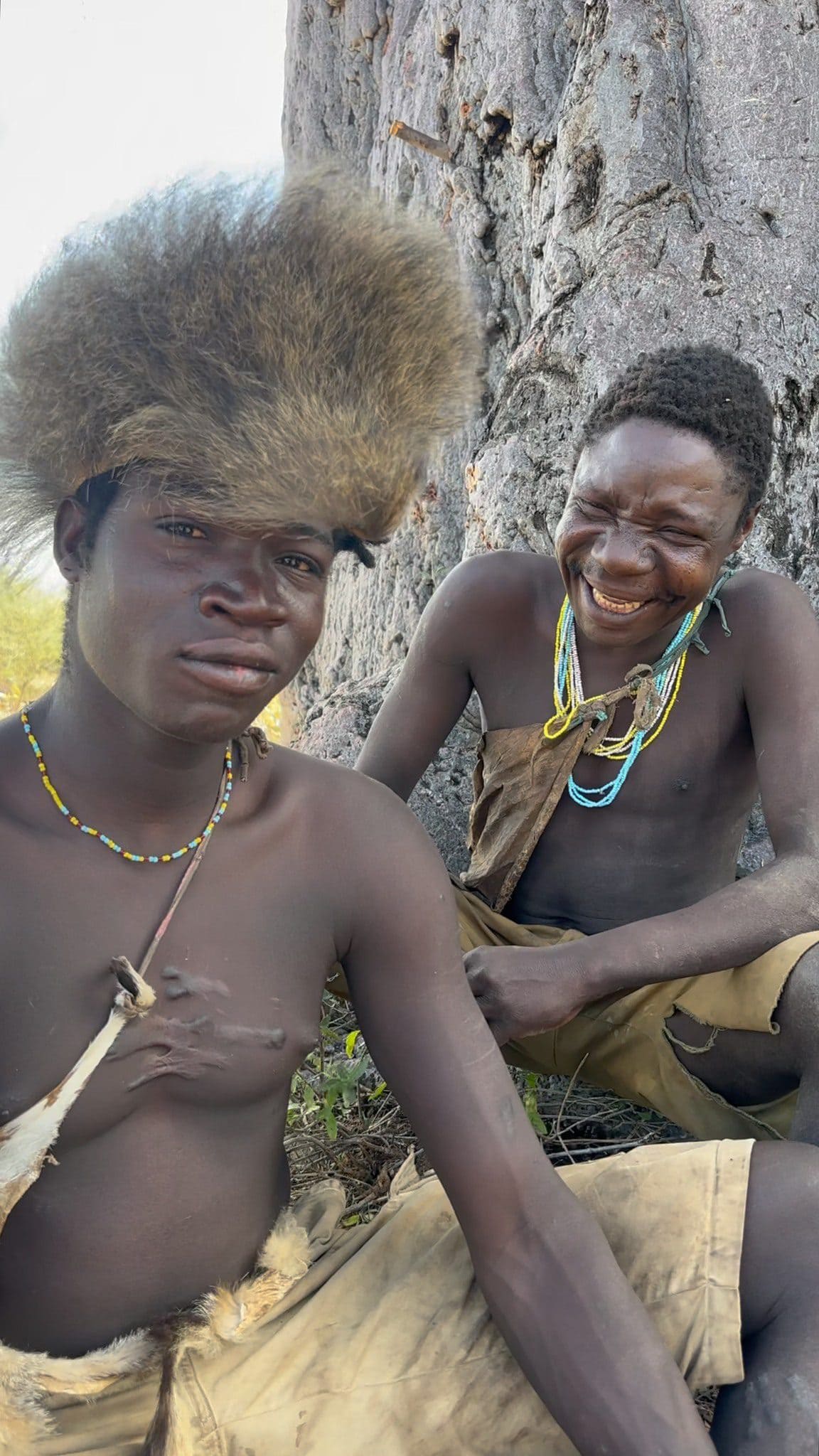
Hadzabe tribe in Tanzania. Photo/Hadzabe Tribe Adventures
Haine is a key character who is often called the “first man” or a creative being. Haine reportedly set up the social order and is linked to life, death, and the health of the people in their oral traditions. People think he gave the Hadzabe their territory, language, and way of life. Ishoko, the sun, is generally thought of as Haine’s other half, and some people think of her as his wife or sister. She is a kind person and is linked to sunshine, warmth, and healing.
Talking to ancestor spirits (epeme) is at the heart of their spiritual practice. These spirits are not gods. They are the souls of dead ancestors who can affect the living world, especially when it comes to health, hunting success, and societal peace. People both respect and fear the epeme spirits. Rituals, which include night-time dances by men, happen to please these spirits, seek their help, or keep bad luck away. The spiritual life of the Hadzabe tribe is basically a practical interaction with the spirits of their ancestors and the strong powers of nature that helps them stay alive and keep things in harmony around them.
How Long Do Hadza People Live?
Demographic data on the Hadza show that their life expectancy at birth is far lower than in industrialised countries, usually between 30 and 40 years. This shocking number needs important context, though, and it doesn’t mean that Hadza people can’t survive into their 60s or beyond. The average is very high because many babies and children die, which is usual in hunter-gatherer societies, where infectious diseases, stomach problems, and accidents kill many young people.
A Hadza person who makes it through the dangerous early years often lives into their 50s, 60s, or even 70s. Their way of life is hard on their bodies, yet it has some health benefits. They eat a lot of fibre, don’t eat a lot of sugar or saturated fats, and don’t eat processed foods. This helps them avoid modern “diseases of civilisation” like diabetes, high blood pressure, and heart disease. They stay active physically for the rest of their lives.
The main things that threaten the lives of adults in the Hadzabe Tribe are the environment and not being able to get modern emergency medical care. A simple infection from a cut, a snake bite, a heavy load of parasites, or problems during childbirth can kill you. No antibiotics, procedures, or specialised trauma care are available. Thus, despite their lifespan is biologically similar to anyone else’s, the length of their lives is affected by the dangers of their lifestyle.
Do the Hadza Eat Meat?
Meat is a very important part of the Hadza diet because it is high in nutrients, but it doesn’t make up most of their daily calories. The Hadza are good at archery and hunt a lot of different animals. They mostly hunt medium-sized mammals like baboons, warthogs, and kudus, but they will also hunt smaller creatures like dik-diks, hyraxes, and a wide range of birds. They also chase bigger and dangerous animals like giraffes, but this is a group activity that doesn’t happen very often.
Hunting is a great way to show off your skills and knowledge. Men use handmade bows strung with animal tendons and arrows coated with a natural poison from the desert rose plant (Adenium obesum). This poison doesn’t kill the animal right away. It slowly paralyses it, letting the hunters follow it for hours or even days until it dies.
When someone kills something, they share the meat fairly and openly across the group. The hunter who killed the animal doesn’t get the tastiest pieces. Instead, the meat is divided based on family and social relationships, making sure that everyone, even the elderly and families with young children, gets a piece. This practice helps people stay together and is an important safety net. Therefore, hunting and eating meat are just as much social and cultural activities as they are nutritional ones for the Hadzabe tribe.
What is the Hadza’s Sleep Like?
The Hadza’s sleeping arrangements are temporary, modest, and directly related to their nomadic way of life. They don’t make shelters that last. Instead, they build modest, temporary houses (bomas) in a few hours for each camp. Most of the time, these houses are formed of branches woven into a dome-shaped frame and covered with thick, grass-like plants. They are meant to shelter you from the sun and wind, but they are open enough that they don’t keep heat in.
People or small family groups often choose not to build a hut at all. A lot of Hadza people sleep outside on the ground, usually on animal skins or handmade mats. They make a little fire near to where they sleep. This serves many purposes: it keeps them warm at night, keeps bugs away, and keeps dangerous creatures like lions and hyenas away.
They also have very flexible sleep schedules. They don’t always stick to a tight sleep pattern at night. Some stay up late talking, telling stories, or dancing around a fire in the middle of the night, and they sleep throughout the day. The whole camp is a shared space, and the huts and sleeping areas are close together, so you can always hear the group at night.
Do the Hadzabe People Take Baths?
The Hadza people don’t use soap and water to shower daily. They don’t wash themselves like people in the West do. But this doesn’t imply they don’t care about cleanliness. Their hygiene habits are based on the dry climate and the resources they have.
They mostly clean themselves by taking smoke baths. They will sit or stand in the smoke of particular kinds of smoldering wood. This smoke goes into their skin and traditional clothing, usually made of animal skin. This method works well in containing body lice, ticks, and other parasites, and it gives off a peculiar smokey smell that is typical of the Hadza.
However, they do swim in the seasonal Lake Eyasi and other water sources, although they do this more for fun and to cool off than to clean up. Water is a valuable resource, thus soaking your whole body in it isn’t a top concern. They focus on keeping pests away and making people feel comfortable, not on getting rid of filth and smell like we do today.
Is it Possible to Visit the Hadza Tribe?
Travelers can visit the Hadzabe tribe. Cultural tourism still is a tiny but important source of income for several towns, especially those near the main tourist routes around Lake Eyasi. Tour providers in Arusha or Karatu usually set up these visits.
A normal visit includes a guided journey to a Hadza camp where tourists see how the Hadza live and work. Men show off their archery skills and let anyone try to fire a bow. They show you how to start a fire with two sticks (the hand-drill method). Women show how they dig for tubers or prepare baobab fruit. At the end of the visit, there is a chance you will buy handmade arrows, beads, or other small things.
In conclusion, Tanzania’s Hadzabe tribe still lives in ancient times of hunting and gathering. They have resisted various efforts by the government and other entities to abandon their traditional way of life. Their diet mainly consists of honey, milk, fruits and vegetables which they share amongst themselves. Marriage is simple, and there is no polygamy here.
Discover more from See Africa Today
Subscribe to get the latest posts sent to your email.