

Namibia and Mali are special in the wildlife world since they are the only two countries with surviving herds of desert elephants in the world. Although Mali isn’t so popular with this phenomenon, Namibia is extremely famous for its huge elephant herds roaming the Namib Desert. It’s so amazing how these elephants survive under harsh conditions. While not officially a subspecies separate from their savannah cousins, these creatures are unique in their learned behaviours. This article provides more information about these elephants, including their population, where to find them and what they eat.
Table of Contents
How Many Desert Elephants are Left?
There are very few desert-dwelling elephants in the world. Data from Conservation groups and the International Union for Conservation of Nature (IUCN) put the number for living desert elephants at no more than 500. The most studied and important subpopulation lives in the dry areas of northwestern Namibia and southwestern Angola. There is a smaller, genetically different, and even more vulnerable population of about 250 to 300 elephants in Mali’s Sahel region. This herd is in great danger from drought and human violence.
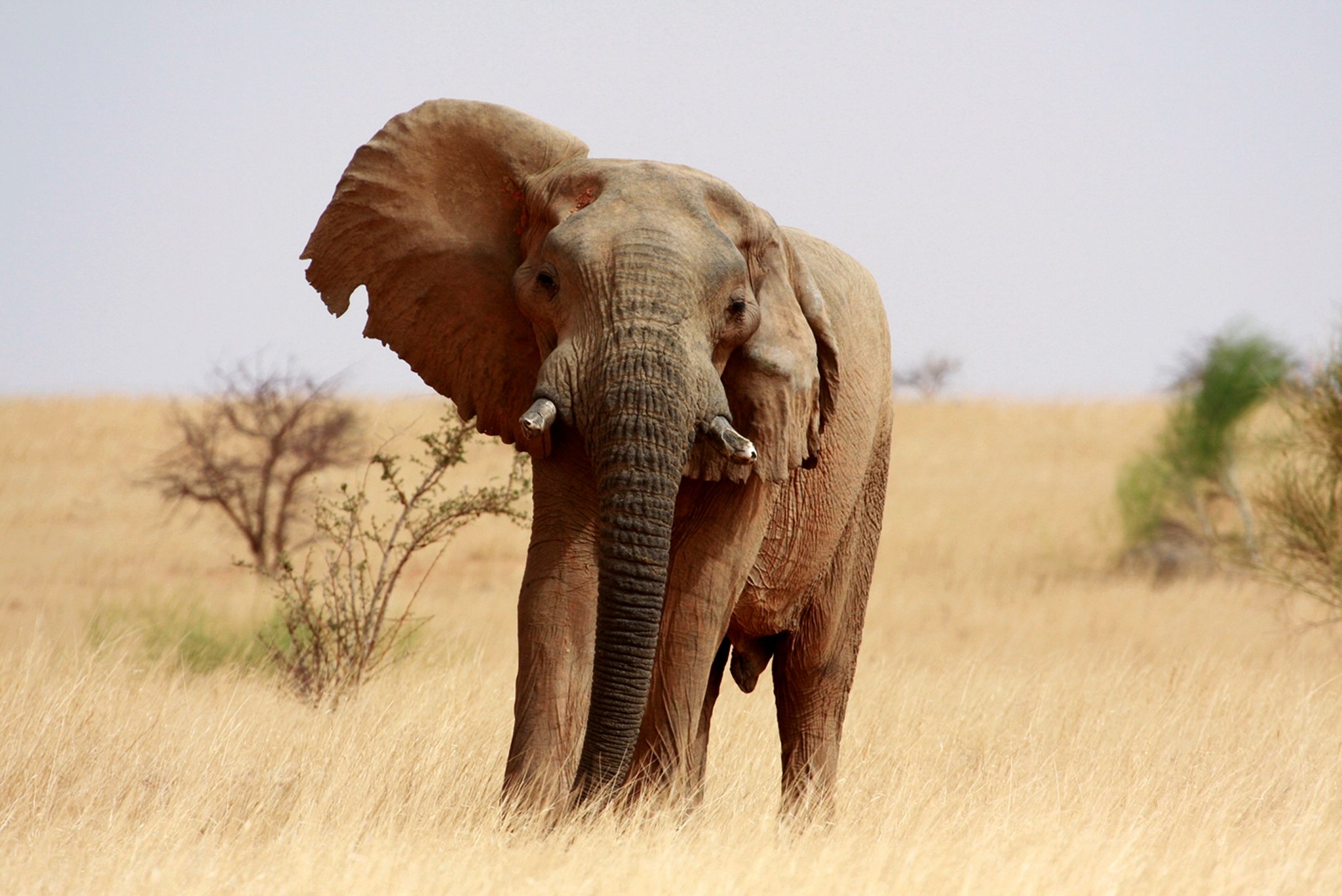
A Desert Elephant in Mali. Photo/The New York Times
Are there any Elephants in the Desert?
There are elephants that not only live in the desert, but are also well-suited to do so, although some people think that they are two different species. They are not; they are African savanna elephants (Loxodonta africana) that adapted to life under harsh conditions, such as living in hot and dry places. People commonly call them “desert-adapted” elephants.
The Kunene and Kaokoveld regions of Namibia and Angola, and Mali’s Gourma region, have the only living desert elephants in the wild. These elephants don’t live in the Sahara’s huge, sandy dunes. Instead, they live in dry areas with rocky slopes, gravel plains, and rivers that only last for a short time. Their existence shows how adaptable elephants are, which means they can live in a wider range of places than you thought.
How Long Can Desert Elephants Go Without Water?
Generally, desert elephants take water after every three to four days. They travel up to 70 kilometres (43 miles) in a single night to find water. When it’s dry, they get the water from their food through moisture from the plants they eat. Succulent plants, such as the !nara melon, and some tree portions, like the ana tree, provide a large proportion of their water needs. This modification lets them use food sources that are far away from permanent waterholes to quench their thirst, which is an important survival strategy in a harsh environment.
How Do Desert Elephants Find Water?
Elephants living in the desert use a complex “mental map” of their home range to get water either from a waterhole or succulent plants. They learn these tricks from matriarchs who created paths to water sources. They can recall where seasonal rivers, springs, and even certain rock fissures that hold water exist. Some of these water sources aren’t known to people.
They have very good senses. They can smell water vapour from miles away and follow the smell to the water point. Further, they feel vibrations through their feet, which helps them find underground water flows or thunderstorms that are far away. Due to their generational memory and heightened senses, these elephants carefully organise their hunt for water, which helps them stay alive in Namibia and Mali.
What’s the Difference Between Savannah Elephants and Desert Elephants?
For a while, desert elephants were considered a separate subspecies from their savannah counterparts, but this is no longer the case. There are no genetic differences between elephants living in savannah areas like Etosha National Park and those roaming in the Namib Desert. Desert elephants are simply African bush elephants (Loxodonta africana) with unique characteristics. They have made the Namib Desert their home and exhibit small adaptations to the extreme temperatures and terrain of the region.
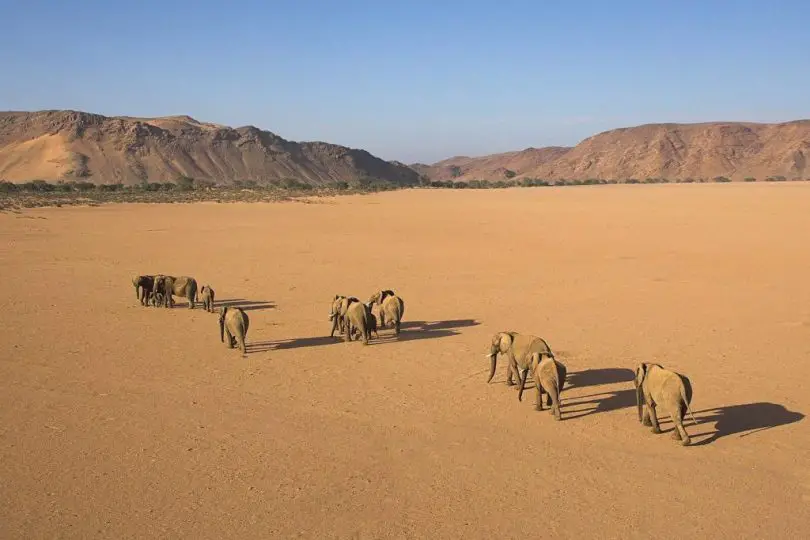
However, striking differences are such as they (elephants in desert) have smaller bodies and longer legs than their bush-dwelling cousins. They also have bigger feet, which allows them to walk with more ease across the very soft desert sand. This adaptation is very useful because these elephants travel up to 124 miles in search of water.
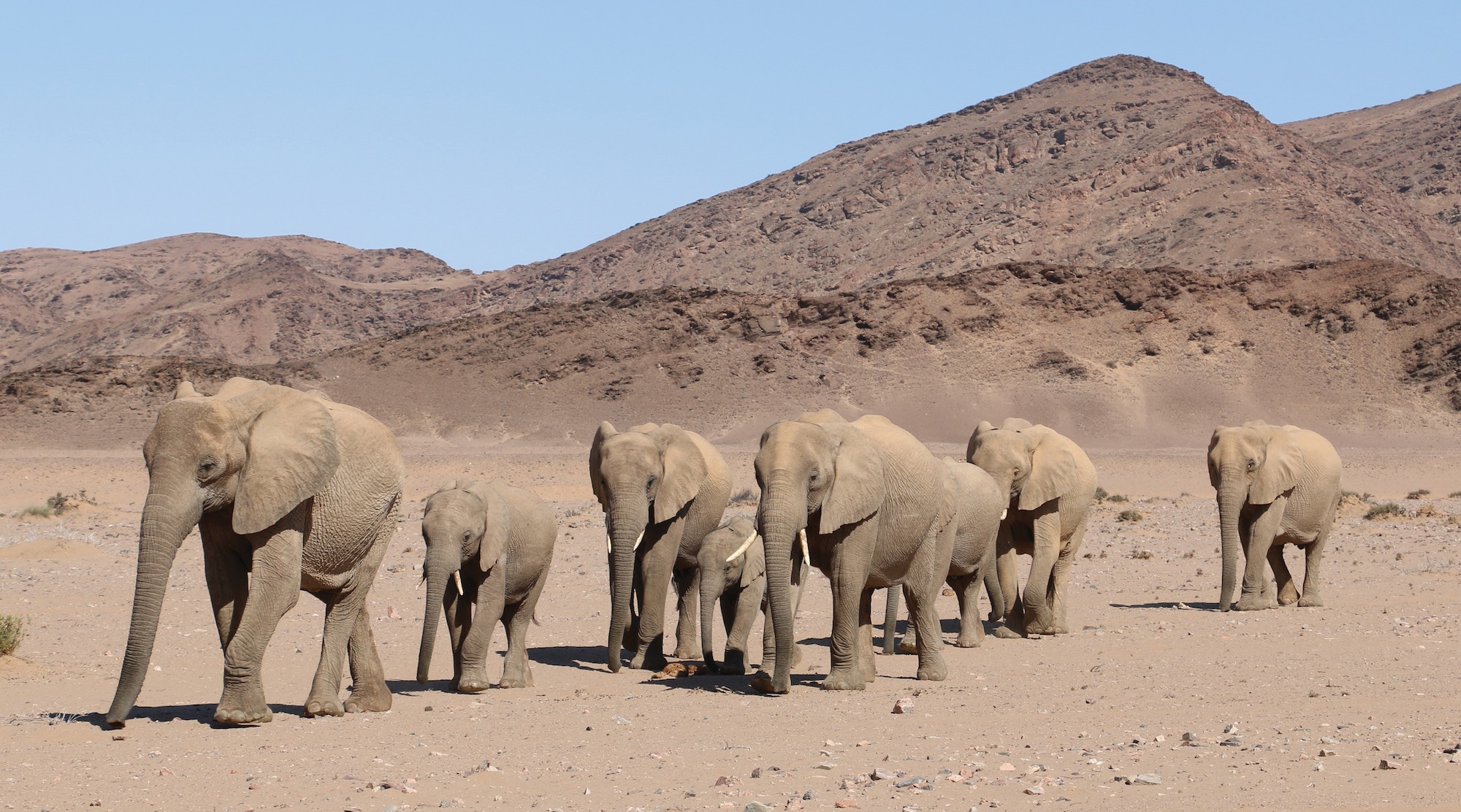
Desert elephants. Photo/ Conservation Namibia.
Whereas savannah elephants are known to leave a trail of destruction in their wake, desert elephants take care not to damage any trees or bushes on their path. This is quite understandable because why would they destroy bushes and trees they come across in an environment where all plants are precious? I’ll fill you in on a secret: Elephants are among the most intelligent mammals on earth.
Where Are the Desert Elephants Located?
Elephants in the Namib Desert live in arid and semi-arid regions encompassing 115,154 square kilometres of rocky mountains and gravel plains in the northwest part of the country. They graze on the sparse vegetation within the main riverbeds.
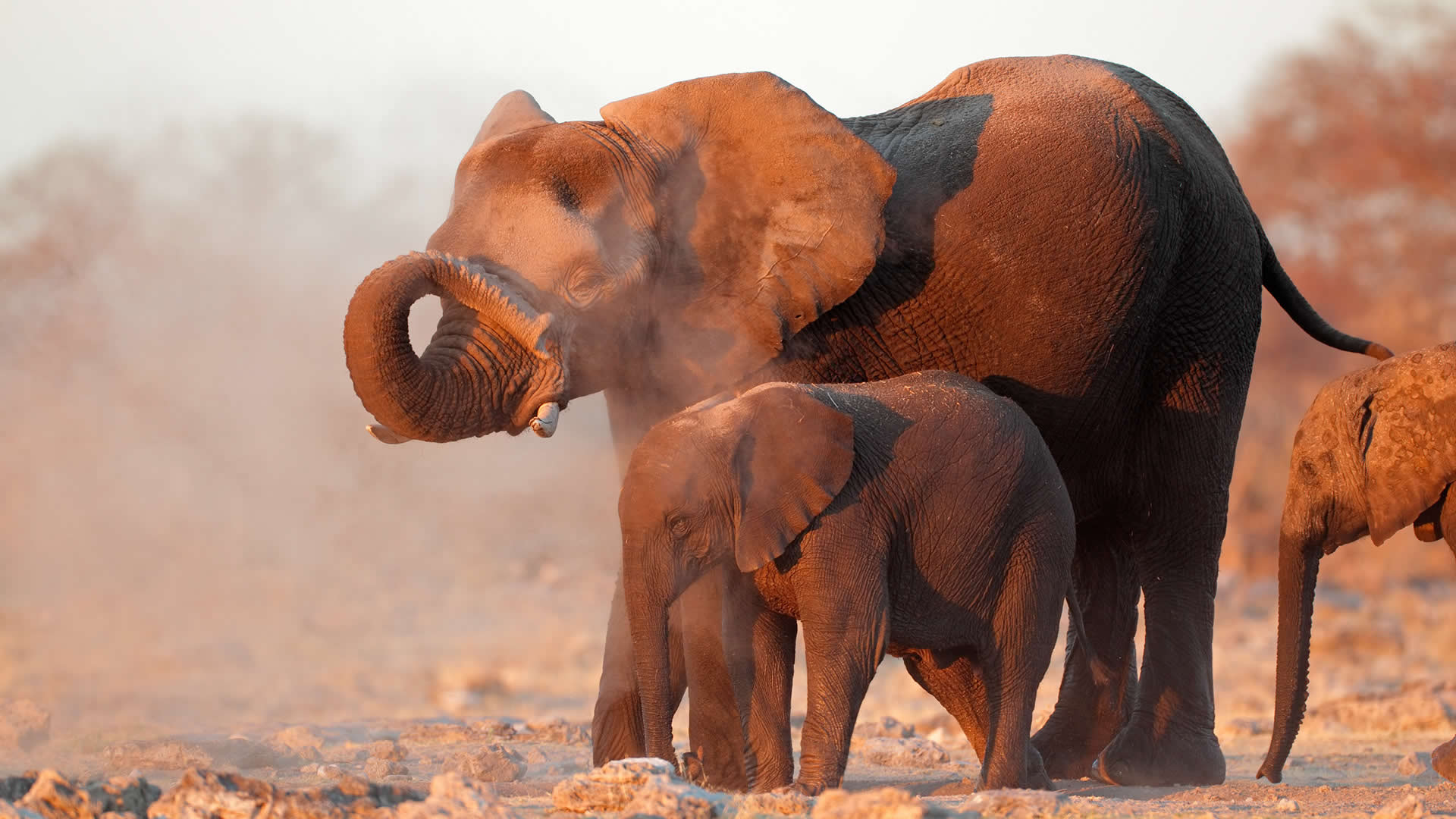
Elephants in the wild. Photo/ Oyster Worldwide.
If you want to see them together with other animals such as zebras, giraffes and the black rhino, head north, into Damaraland and towards the Skeleton Coast National Park. Seeing an elephant in the wild is a humbling experience, but spotting Namibia’s desert elephants is extraordinary.
How Many Desert Elephants Are Left in Namibia?
During the 18th century, the elephant population in the Namib region was over 2,500. Unfortunately, a large part of the elephant population perished in the second half of the 19th century. According to Elephant Human Relations Aid (EHRA), the population of desert elephants in Namibia is approximately 150 at the moment. The total number of desert elephants living in the southern ephemeral rivers of the northern Erongo and southern Kunene region is 62. Since 2016, the population of Ugab river elephants has decreased by 32 percent due to human-caused reasons and challenging environmental conditions.
According to EHRA Namibia, 9 out of 14 calves born died in the Ugab River and Huab River combined from 2014 to 2018. It is estimated that 28 African elephants are lost annually due to poaching, which causes severe impacts on the large mammals.
What Do Desert Elephants Eat?
The desert elephants of Namibia feed on a variety of flora found in the Namib region. The list includes flowers, shoots, bulbs, fruits, grasses, tuberous roots and bark.
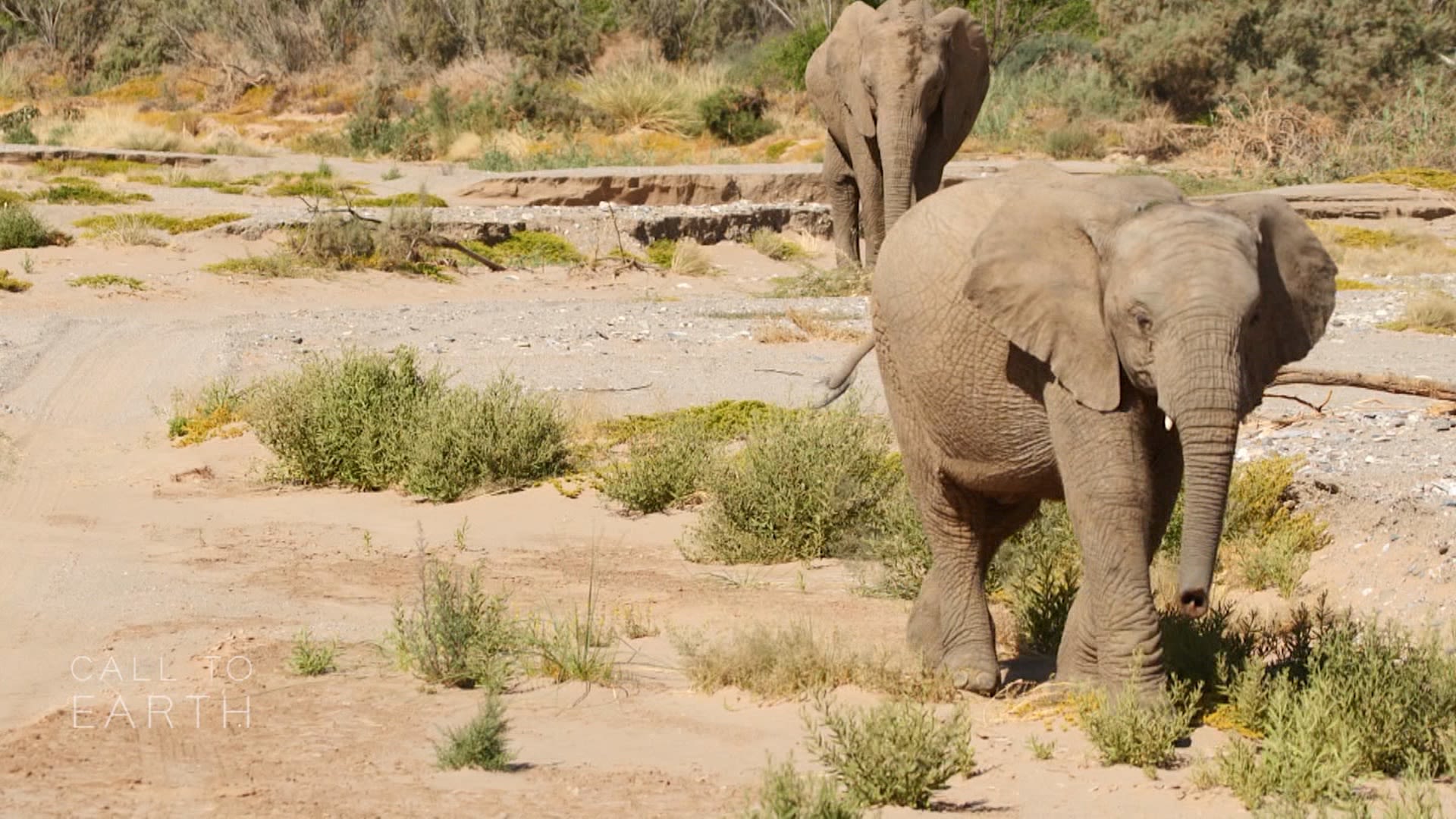
The feeding habits of the desert elephants are highly varied. Photo/ CNN.
Desert elephants specifically spend time eating Camel Thorn trees and Ana trees. They also browse Mopane trees when necessary and find Tamarisk trees for salt intake. During the rainy season, you will spot them feeding mostly on the grass which is available. To sum up these elephants’ feeding habits, their diet is highly varied and depends on the availability of food from season to season.
Discover more from See Africa Today
Subscribe to get the latest posts sent to your email.